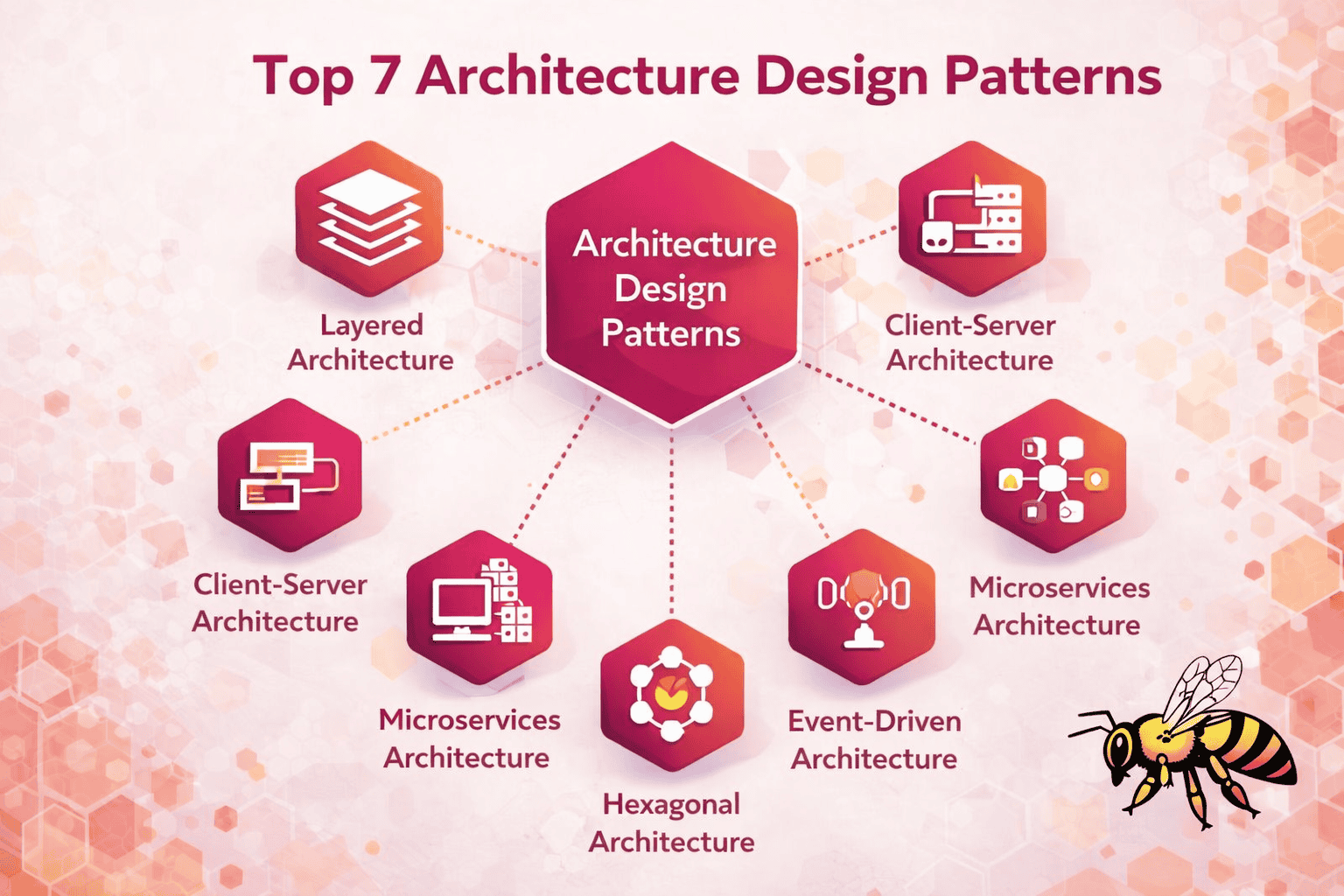
When developers first move into solution design, one of the most confusing areas is architecture patterns.
You hear terms like:
- Microservices
- Event-driven
- Layered architecture
- Hexagonal architecture
These terms sound important, but without context, they feel abstract.
This guide explains 7 essential software architecture patterns, in plain terms, with practical examples – so you can begin thinking like a designer, not just an implementer.
First: What Is an Architecture Pattern?
An architecture pattern is a high-level structural approach to organizing a system.
It defines:
- How components are grouped
- How they communicate
- Where responsibilities sit
- How the system evolves
This is not about code, it is about structure.
Think of architecture patterns as blueprints for organizing complexity.
1️⃣ Layered Architecture (The Classic Starting Point)
What It Is
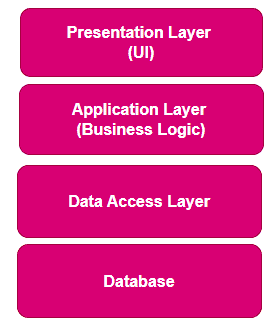
Layered architecture separates responsibilities into horizontal layers.
Common example:
- Presentation Layer (UI)
- Application Layer (Business Logic)
- Data Access Layer
- Database
Each layer only communicates with the layer below it.
Real-World Example
A banking web application:
- Frontend handles forms and user interaction
- Service layer validates business rules
- Repository layer retrieves payment data
- Database stores transaction records
Why It’s Good for Beginners
- Easy to understand
- Clear separation of responsibilities
- Works well for many internal enterprise systems
If you want to learn more about this topic: Head to my article here
When It Struggles
- Large systems become tightly coupled
- Harder to scale specific components independently
2️⃣ Client-Server Architecture
What It Is
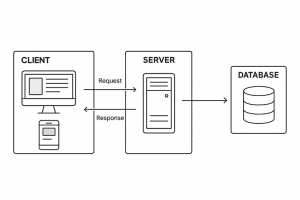
Clients (users or applications) request services from a centralized server.
Most web applications follow this pattern.
Real-World Example
Mobile banking app:
- App (client) sends API request
- Backend server processes request
- Server responds with account data
Why It’s Important
It’s foundational to modern distributed systems.
Almost every web-based system builds on this idea.
3️⃣ Microservices Architecture
What It Is
Instead of one large application, the system is split into smaller, independently deployable services.
Each service owns a specific capability.
Real-World Example
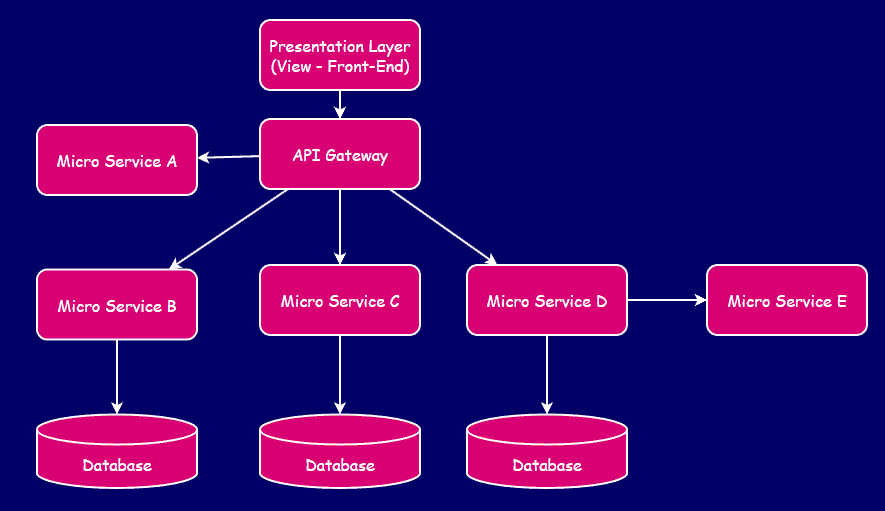
E-commerce platform:
- Order service
- Payment service
- Inventory service
- Shipping service
Each service can scale independently
Why Teams Use It
- Independent deployments
- Better scalability
- Technology flexibility
Beginner Warning
Microservices increase complexity:
- Network communication
- Distributed data consistency
- Monitoring challenges
They are not always the right starting point.
4️⃣ Event-Driven Architecture
What It Is
Components communicate by publishing and reacting to events.
Instead of direct calls, systems respond to “something happened.”
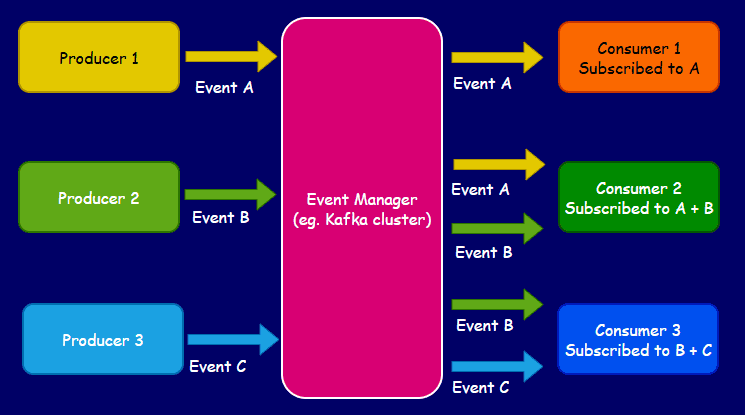
Real-World Example
Payment system:
- Payment completed
- Event is published
- Notification service sends receipt
- Analytics system updates metrics
- Loyalty system awards points
None of these services call each other directly.
They react to events.
Why It’s Powerful
- Loosely coupled systems
- High scalability
- Supports real-time workflows
When It’s Used
- Payments
- E-commerce
- Order processing
- Real-time analytics
5️⃣ Monolithic Architecture
What It Is
Everything lives in a single deployable application.
All modules share the same runtime and database.
Real-World Example
Early-stage startup platform:
- User management
- Payments
- Reporting
- Notifications
All inside one application.
Why It Still Matters
Monoliths are:
- Simpler to start
- Easier to deploy
- Easier to debug
Many successful companies begin this way.
Key Insight
Monolith is not “bad architecture.”
Unstructured monolith is.
6️⃣ Hexagonal Architecture (Ports and Adapters)
What It Is
This is also called “Ports and Adapters.”
It isolates business logic from external systems.
Core logic sits in the center.
External systems connect via adapters.
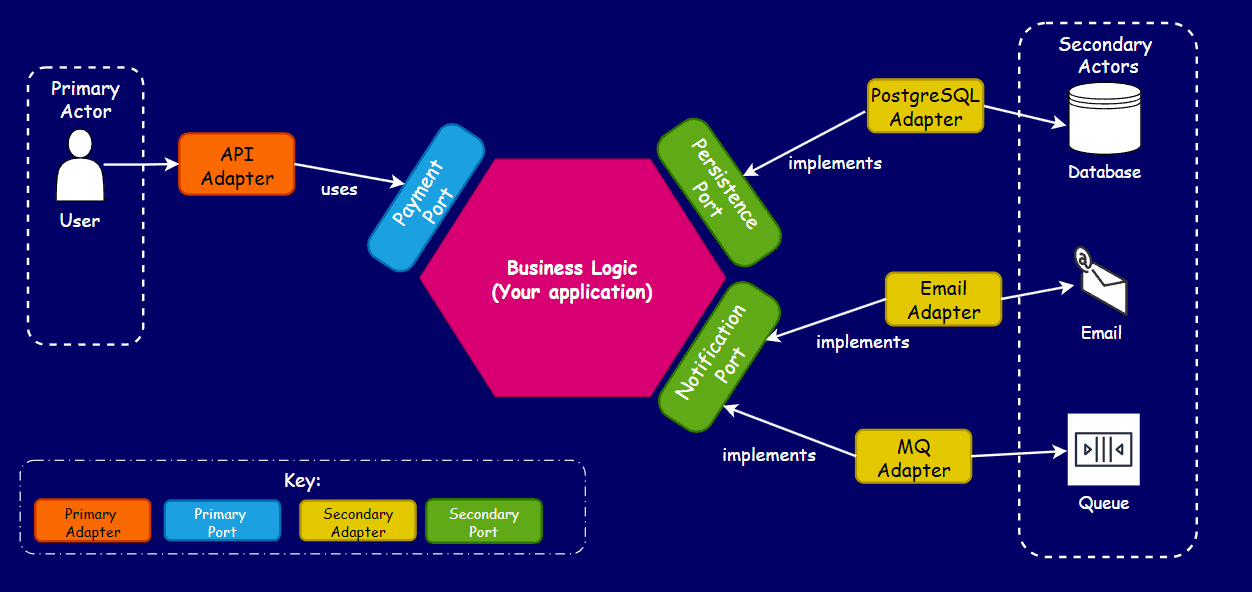
Real-World Example
Payment processing engine:
Core business logic:
- Validate payment
- Calculate fees
- Apply limits
Adapters:
- REST API adapter
- Database adapter
- Message queue adapter
If the database changes, core logic remains unaffected.
Why It’s Powerful
- Improves testability
- Reduces dependency on infrastructure
- Supports long-term maintainability
7️⃣ Modular Monolith
What It Is
A structured monolith divided into clearly defined modules with strict boundaries.
Deployed as one unit – but internally organized.
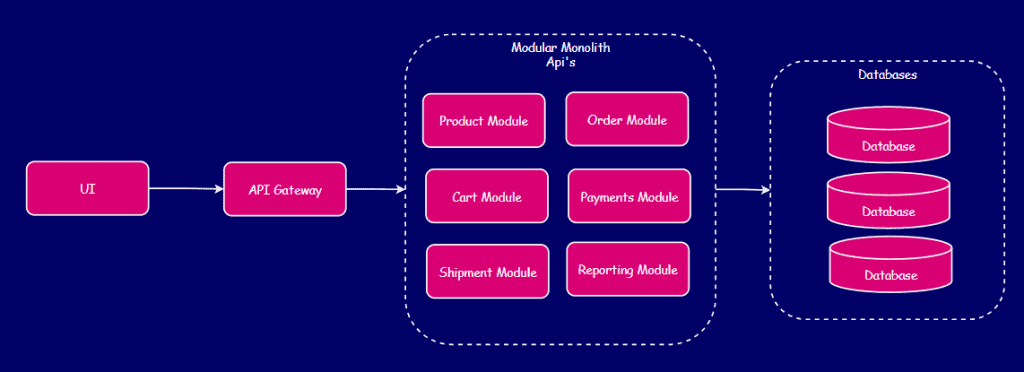
Real-World Example
Typical Ordering system:
Modules:
- Product
- Order
- Cart
- Payments
Each module has internal boundaries, even though deployment is single.
Why It’s a Strong Modern Option
- Lower operational complexity than microservices
- Better structure than traditional monolith
- Easier evolution path
How to Choose the Right Pattern
Beginners often ask:
“Which architecture pattern is best?”
The answer:
It depends on:
- System size
- Team size
- Regulatory environment
- Scalability requirements
- Deployment maturity
- Operational capability
Architecture is about trade-offs.
Not trends.
A Simple Decision Guide for Beginners
| Situation | Likely Pattern |
|---|---|
| Small internal tool | Layered or modular monolith |
| Startup MVP | Monolith |
| High-scale distributed system | Microservices |
| Real-time workflow system | Event-driven |
| Regulated financial platform | Often layered + event-driven hybrid |
Important: Patterns Can Be Combined
Real-world systems rarely use just one pattern.
Example:
An enterprise payment platform may use:
- Modular monolith for internal admin system
- Microservices for customer-facing APIs
- Event-driven architecture for transaction processing
Architecture patterns are tools – not rules.
Why Understanding Patterns Matters for Transitioning into Design
When you move from development into solution design:
You stop asking: “How do I code this?”
And start asking: “How should this system be structured?”
Patterns help you:
- Communicate design clearly
- Evaluate trade-offs
- Avoid unnecessary complexity
- Design intentionally
They form part of your architectural vocabulary.
Final Thought
Architecture patterns are not about being modern. They are about being deliberate.
A well-designed layered system can outperform a poorly designed microservices platform.
Understanding these seven patterns gives you a foundation. From there, you learn to evaluate, adapt, and combine them based on real constraints.
That is the transition from developer to designer.
If you found this helpful, the BeeStack framework explores how to move from understanding patterns to applying structured solution design in real-world environments.
Because architecture is not just about patterns.
It’s about disciplined thinking.
A software architecture pattern is a high-level structural approach used to organize a system’s components and responsibilities. It defines how parts of a system interact, where logic lives, and how the system evolves over time. It focuses on structure rather than code.
Architecture patterns operate at the system level (e.g., microservices, layered architecture).
Design patterns operate at the code level (e.g., Singleton, Factory, Observer).
Architecture patterns define how entire systems are structured. Design patterns solve specific programming problems within those systems.
For most beginners, starting with:
Layered architecture
Modular monolith
These are easier to understand, deploy, and maintain. Microservices and event-driven architectures introduce distributed complexity and should be adopted when justified by real requirements.
A monolith is a single deployable application where all components run together.
Microservices split the system into smaller independent services that communicate over a network.
Microservices offer scalability and deployment flexibility but increase operational complexity.
Microservices are typically justified when:
Teams need independent deployments
Different services scale at different rates
The system is large and complex
Organizational structure supports distributed ownership
They are not necessary for small or early-stage systems.
Event-driven architecture is when systems react to events instead of directly calling each other.
For example:
When a payment succeeds, an event is published. Other systems (notifications, analytics, loyalty) respond independently.
This reduces tight coupling and improves scalability.
Yes. Most real-world systems use a combination of patterns.
For example:
* A modular monolith internally
* Microservices for external APIs
* Event-driven messaging for background processing
Patterns are tools, not rigid rules.
Choosing a pattern depends on:
* System size
* Team size
* Performance requirements
* Regulatory constraints
* Operational maturity
* Scalability expectations
Architecture decisions should be based on trade-offs, not trends.
No. Microservices add complexity in:
* Networking
* Monitoring
* Distributed data consistency
* Deployment management
For many systems, a well-structured monolith is more effective.
Architecture patterns give solution architects:
* A vocabulary to communicate structure
* A framework to evaluate trade-offs
* A way to prevent unnecessary complexity
* A foundation for scalable system design
They help shift thinking from implementation to structure.
Most startups begin with a monolithic architecture because:
* It is simpler
* It reduces operational overhead
* It speeds up development
They may evolve to microservices as complexity and scale increase.
To transition into solution design, focus on:
* Understanding system boundaries
* Learning scalability principles
* Studying architecture trade-offs
* Improving documentation skills
* Thinking in terms of system constraints
Architecture is less about coding and more about structured decision-making.