Modern software systems are no longer small, isolated applications.
They are ecosystems – cloud platforms, integrations, APIs, data flows, security boundaries, compliance requirements, and evolving business models. Yet many teams still begin projects with a familiar pattern:
- Start building features
- Choose technology early
- Discover architectural gaps late
That gap between business ambition and technical reality is where solution architecture lives.
This article explains:
- What solution architecture actually is
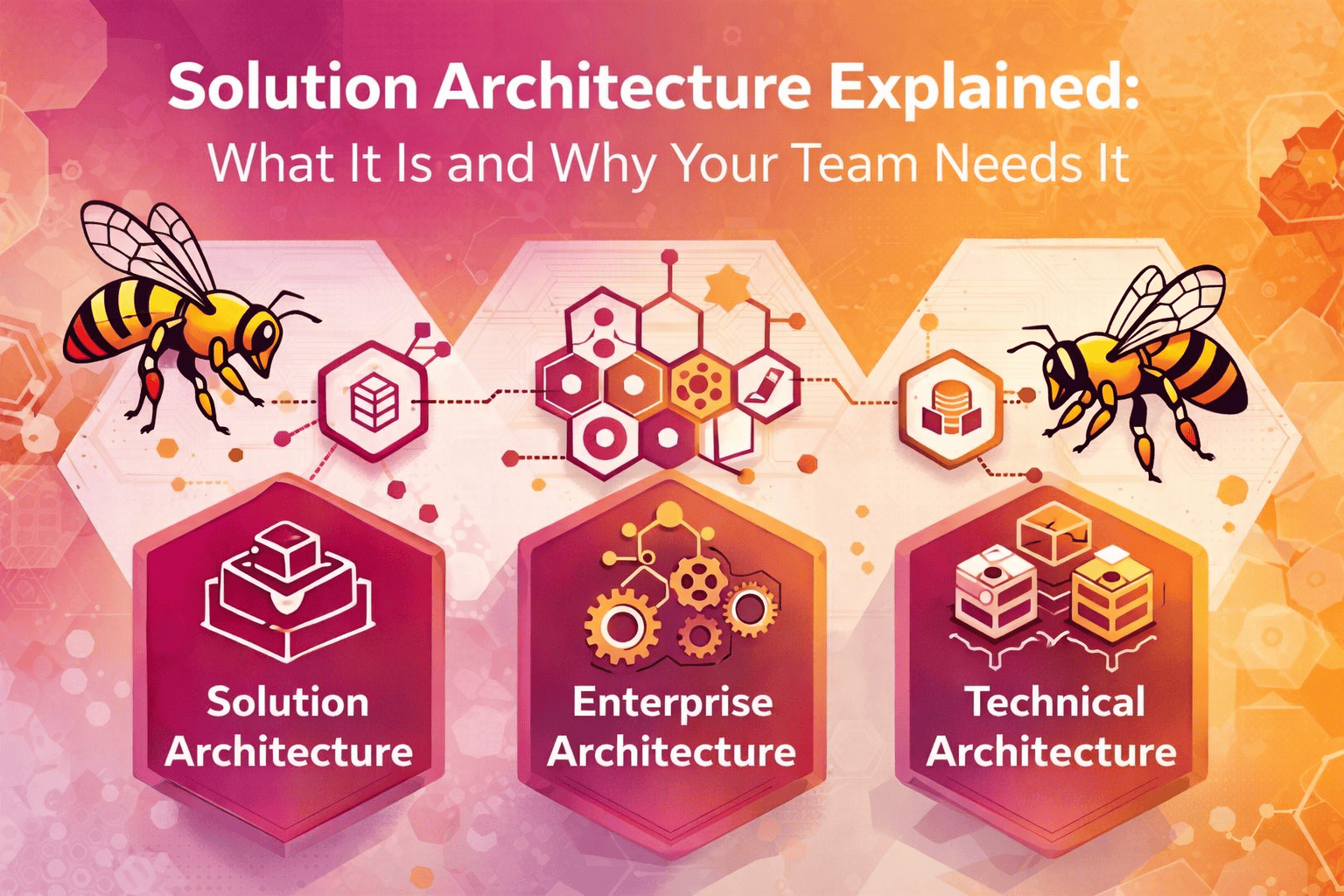
- How it differs from enterprise and technical architecture
- Why it matters in modern software engineering
- When you should involve a solution architect
- What this looks like in real-world projects
What Is Solution Architecture?
Solution architecture is the structured design of a specific solution to a defined business problem.
It connects:
- Business objectives
- Functional requirements
- Non-functional requirements
- Technology decisions
- Integration points
- Constraints
Into one coherent design. A solution architect does not just design systems; they design decisions.
Solution Architecture vs Enterprise Architecture vs Technical Architecture
These roles are often confused. They operate at different levels of scope.
1. Enterprise Architecture (Strategic Level)
Enterprise architecture operates at the highest level.
It defines:
- Technology standards across the organization
- Strategic platform direction
- Governance models
- Long-term capability roadmaps
Enterprise architects ask:
How should technology evolve across the entire organization over the next 3–5 years?
Their focus is alignment and consistency at scale.
2. Solution Architecture (Project / Product Level)
Solution architecture sits one level down.
It defines:
- The architecture for a specific initiative
- How systems integrate
- How requirements are translated into design
- How constraints are managed
- Trade-offs between options
Solution architects ask:
Given our enterprise standards, business needs, and constraints – what is the best design for this initiative?
They operate in the space between strategy and implementation.
3. Technical Architecture (Implementation Level)
Technical architecture focuses on detailed design inside a system.
It defines:
- Class structures
- Deployment models
- Framework selection
- Infrastructure configuration
- Code-level patterns
Technical architects ask:
How should we implement this component effectively?
They work close to engineering execution.
A Simple Way to Think About It
Enterprise Architecture → Sets the direction
Solution Architecture → Designs the route
Technical Architecture → Builds the vehicle
Each is essential.
But they solve different problems.
The Role of Solution Architecture in Modern Software Engineering
Modern systems are:
- Distributed
- API-driven
- Cloud-native
- Security-sensitive
- Highly integrated
This increases complexity.
Without structured architectural thinking, teams experience:
- Rework due to unclear requirements
- Integration failures
- Performance bottlenecks discovered late
- Security risks identified after deployment
- Over-engineered systems solving future problems instead of present ones
Solution architecture provides:
- Clarity before coding
- Trade-off analysis before commitment
- Alignment before implementation
It reduces expensive surprises, increases predictability and protects long-term maintainability.
When Should You Involve a Solution Architect?
Too often, architects are involved after:
- Requirements are finalized
- Technology has been selected
- Teams have already started building
At that point, architecture becomes reactive.
A solution architect should be involved when:
1. A Business Initiative Is Defined
As soon as there is a defined problem or opportunity.
Not when the backlog is full or when the sprint starts.
At the problem framing stage.
2. Integration Is Required
Any time multiple systems must interact:
- CRM + ERP
- Payment gateway + mobile app
- E-commerce + fulfillment
- Data warehouse + operational systems
Integration complexity demands architectural clarity.
3. Non-Functional Requirements Matter
If your solution must be:
- Highly available
- Secure
- Scalable
- Compliant
- High performance
Then architecture cannot be an afterthought.
4. Trade-offs Must Be Made
Cloud vs on-premise
Microservices vs modular monolith
Event-driven vs synchronous
Build vs buy
These are not implementation decisions. They are architectural decisions.

Real-World Example 1:
National Payments System
Imagine designing a real-time payments platform for a national banking network.
Requirements include:
- Near-instant transaction processing
- Regulatory compliance
- High availability
- Auditability
- Integration with legacy banking systems
A developer cannot solve this in isolation.
A solution architect must:
- Define system boundaries
- Choose integration patterns
- Address failure scenarios
- Align with regulatory standards
- Document trade-offs
Without this layer of structured thinking, the system risks instability and compliance failure.
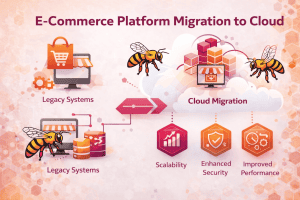
Real-World Example 2:
E-Commerce Platform Migration to Cloud
A company migrates from a monolithic on-premise platform to AWS.
Business goals:
- Faster feature rollout
- Scalability during peak sales
- Improved customer experience
Without solution architecture, teams might:
- Over-split services prematurely
- Ignore data consistency challenges
- Miss security design considerations
A solution architect:
- Defines the migration strategy
- Determines service boundaries
- Designs integration patterns
- Ensures scalability and observability
- Aligns architecture to business priorities
The result is not just cloud adoption – but controlled evolution.
The Most Misunderstood Aspect of Solution Architecture
Many assume solution architecture is about drawing diagrams. It is not.
It is about:
- Understanding constraints
- Evaluating options
- Documenting trade-offs
- Communicating clearly
- Making deliberate decisions
The diagrams are artifacts. The thinking is the value.
Why Many Teams Underestimate It
Because the cost of missing architecture is delayed.
Problems appear:
- 6 months later
- At scale
- During integration
- During audits
- Under peak load
Architecture is invisible when done well, but painfully visible when neglected.
Where BeeStack Fits
Over years of working in regulated payments environments and cloud transformation initiatives, I observed a consistent pattern:
Teams struggle less with technology – and more with structured decision-making.
They need:
- A practical framework for moving from problem to solution
- A disciplined way to evaluate trade-offs
- Clear documentation practices
- A repeatable approach
That is the foundation of the BeeStack solution design framework.
It is not about tools. It is about clarity.
Final Thought
If your team is:
- Scaling rapidly
- Integrating multiple systems
- Operating in regulated environments
- Or trying to reduce costly rework
Then solution architecture is not optional. It is foundational.
And the earlier it is applied, the less expensive your mistakes become.
FAQs
A solution architect translates business requirements into structured technical designs, evaluates trade-offs, and ensures scalability, security, and integration alignment.
Enterprise architecture sets long-term organizational technology strategy, while solution architecture focuses on designing specific initiatives or systems.
At the problem definition stage, before major technical decisions are made or development begins.
 German
  English